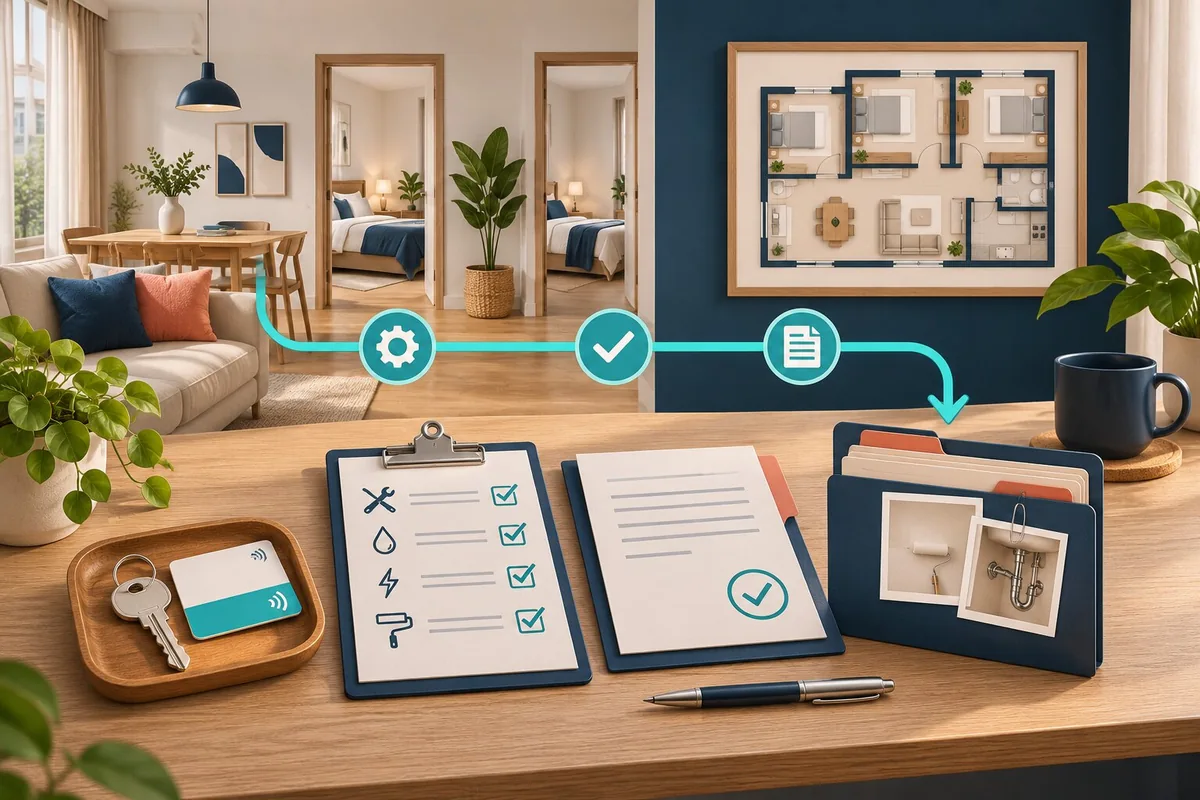
Living in another city does not force you to choose between handling every report yourself and handing every decision to someone else. Start by separating local execution, the owner’s decisions and the evidence that lets you verify what happened.
This guide offers a practical system for managing a room rental remotely. It does not set universal timescales, prices or service scope: each property, proposal and authorisation needs its own agreement.
First: draw your control map
Before delegating tasks, write down who may act, what needs your approval and what information must accompany each decision. An isolated message is not a system: every task should end with a status and a next step.
Decisions you retain
The property strategy, material changes of scope and actions that you have expressly reserved for your approval.
Execution you delegate
Local coordination, operational communication, agreed access and follow-up of tasks included in the proposal.
Evidence you receive
Situation, action taken, available document, pending decision and the person responsible for the next step.
VibeHousing presents comprehensive management as a way to delegate marketing and operations; the assessment starts with each property’s location, layout, condition and availability. This framework opens the conversation, but the exact scope must be recorded in your property proposal.
What to prepare before the first report
Distance matters less when rules are defined before an issue or resident change occurs. Put together a short operating sheet and keep it current.
- Consistent identification of the property, rooms and shared areas.
- List of keys or access methods, authorised custodians and the agreed procedure for each visit.
- Useful contacts and details of equipment, manuals or professionals already known.
- Channel for approvals and an alternative contact if you are unavailable.
- Documents you expect to receive before considering a task reviewed or closed.
Do not include unnecessary personal data in a shared record. Limit access to those who need to act, and focus photos on the item or room, avoiding belongings and documents.
A decision matrix prevents delays and misunderstandings
Instead of a single “tell me everything”, classify situations by the type of decision. The examples below are organisational; they do not determine legal responsibility or replace professional assessment.
| Situation | What the manager prepares | What the owner decides or confirms |
|---|---|---|
| Included routine task | Status, planned action and a record of execution. | Only what the proposal has reserved for owner approval. |
| Change of scope or budget | Reason for the change, alternative and available documents. | Approve, request another option or postpone where possible. |
| Possible immediate risk | Activate the appropriate response and communicate verified facts. | Receive the update and later decide on non-urgent work. |
Do not use this matrix to delay an emergency. For everything else, name the status precisely: waiting for information, waiting for approval, coordinated, completed or waiting for verification.
Keys and access: control without improvisation
Knowing that a spare key exists is not enough. Record how many sets there are, who holds each one and how handover or return is documented. For a visit, identify the affected area, coordinate with residents and use only the access agreed for that case.
When a resident or collaborator changes, review permissions and custody. A departure should not leave access, codes or copies without a known person responsible.
Make every update answer five questions
- What has changed since the last update?
- What is resolved and how was it checked?
- What remains pending and why?
- What decision does the owner need to make?
- Who takes the next step?
The frequency can suit the property and the moment: an open issue needs a different rhythm from a stable period. The key is not to confuse frequency with quality. A useful update supports a decision and records what should happen next.
Example: an appliance fails while you are away
Hypothetical example, not a real VibeHousing case. A resident reports that an appliance in a shared area does not complete its cycle. The manager gathers the appliance reference, symptom and a safe image, checks for an earlier report and opens one issue.
They then coordinate an assessment and present the available scope. If the agreed process requires approval, the owner decides with that information. Closure brings together the work, verification and relevant document. If a part is missing, the status is not “resolved” but waiting for a part and a new check.
Your monthly review can be brief
Alongside incidents, review reported occupancy, upcoming stay changes, open tasks, pending decisions and documents received. Look for exceptions: items without an owner, unconfirmed dates, unanswered approvals or tasks marked complete without verification.
This control does not require inventing a dashboard or new tool. It can live in the format agreed with your manager if each matter has an identity, understandable statuses and orderly access to evidence.
Delegating well does not mean disappearing
Remote management works better when the owner defines the decisions they retain and the local person knows what they can coordinate. The aim is not to receive more messages, but the right information when a decision is needed.
If you want to assess the management of your property, see the VibeHousing service for property owners and bring the layout, condition, availability and this decision map to the first conversation. You can also review the guide to comparing management proposals and the guide to incidents and maintenance before agreeing the scope.