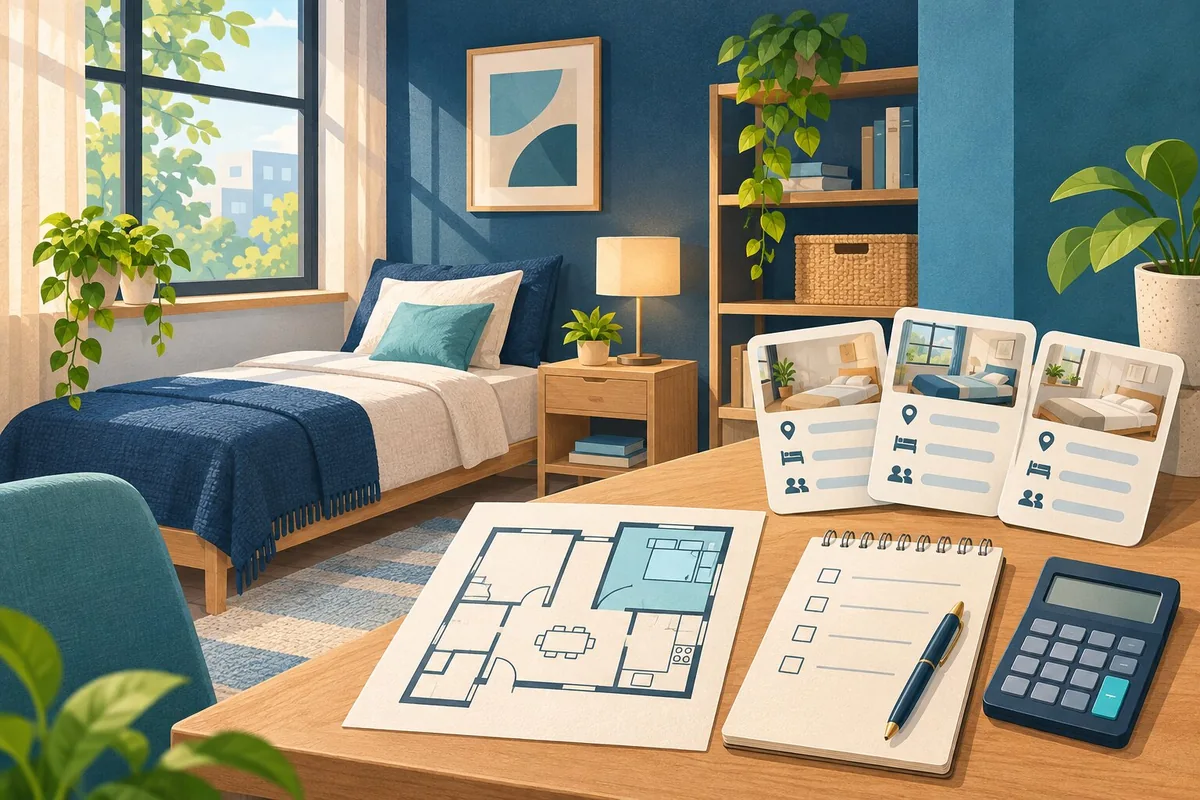
To price a room, do not start by dividing a target rent by the number of bedrooms. Start by defining what is offered, gather genuinely comparable rooms and put every proposal on the same basis: rent, utilities, services, period and terms.
The result is neither a permanent figure nor a guarantee of occupancy. It is a documented asking price that you can explain, review and correct when new evidence appears. This method is for a new listing; it does not determine what changes may be made to a current contract or replace a review of the applicable rules.
The method in five decisions
Define
Describe the room, the property, the services and the stay.
Compare
Select similar listings and record the date and source.
Normalize
Separate rent, utilities, upfront payments and period.
Adjust
Mark verifiable differences without invented coefficients.
Review
Compare the price with genuine inquiries and changes to the listing.
1. Define the product before looking at prices
A room is not rented in isolation from the rest of the experience. The comparison should describe the private space and also the use of the kitchen, bathrooms, living room, outdoor areas, elevator, climate control, connectivity and services included in the offer.
Prepare a consistent record with the address or area, square footage when verified, observable light and aspect, bed type, storage, desk, private or shared bathroom, number of people sharing common areas, equipment, accessibility and condition. Add the proposed length of stay and available dates: two similar listings may serve different calendars.
The public listings for VibeHousing rooms separate rent, utilities, features and availability. That structure is a useful reference for deciding what a person should be able to compare, not a general price list for other properties.
2. Build a comparable sample, not a collection of extremes
Look for active rooms in the same decision area with a similar proposition. Save the URL, the date checked and a screenshot or record of the visible details. Remove duplicates and separately flag listings that do not make clear what is included.
Do not anchor the analysis to the most expensive or cheapest listing. Nor should you mix a room with a private bathroom, a self-contained studio and an internal bedroom as if they were the same product. If there are few nearby comparables, widen the area or period and record that limitation.
| Category | What to record | How to use it |
|---|---|---|
| Location | Address or area, transport and relevant everyday destination. | Compare real journeys, not just the neighborhood name. |
| Room | Verified square footage, light, bed, storage, desk and bathroom. | Classify each difference as better, similar or worse. |
| Housing | Common areas, number of rooms, bathrooms, condition and equipment. | Assess the shared use that accompanies the bedroom. |
| Full price | Visible rent, utilities, services and upfront payments. | Put every listing on the same basis and period. |
| Calendar | Availability, duration and terms of the stay. | Do not compare offers aimed at incompatible periods. |
3. Normalize the full price
Before comparing, separate the rent from amounts for utilities and from any service or upfront payment. Note whether an amount is fixed, estimated or subject to the method stated in each offer. If a listing does not explain it, do not fill the gap by intuition: mark it as unknown.
The guide to rent, allowance and consumption in a shared apartment suggests a record by concept and period. Applying the same boundary avoids concluding that a room is cheaper when part of the cost sits outside the highlighted price.
4. Adjust with evidence, not automatic percentages
For each comparable, mark whether the feature is similar, inferior, superior or unknown in relation to your room. Add a short note that can be checked. The table does not need to turn every difference into a fixed percentage: a terrace, a bathroom or a desk does not have the same value for everyone or in every location.
Order the closest comparables first. Then define a working range and choose an asking price within it, explaining which factors move it towards either end. If the decision depends on an unverified fact, turn it into a task before publishing.
Hypothetical example: three listings and no blind average
A room has exterior light, a desk and climate control, but shares a bathroom and the property has no living room. Three listings are found in the same area: one with a private bathroom, one internal room and one in a property with a large living room.
The property owner does not simply calculate an average. They record which difference explains each position, discard price concepts that cannot be normalized and use the closest listings as references. The result remains an asking proposal, not a guaranteed value or a appraisal.
5. Review listing signals without confusing them with demand
Set a review date and preserve the published version. Record inquiries that match the offered dates and terms, repeated questions, complete applications and changes made. A viewing, a click or a generic message does not by itself prove that the price is right.
If there are no qualified inquiries, also review the presentation, photographs, availability, clarity of costs and terms; lowering the price is not the only hypothesis. If applications arrive but do not fit the period or property, document the reason before changing the proposal.
Check the viability of the whole property
The price of each room is only one line in the analysis. To choose a model, compare expected rents with utilities, maintenance, vacant periods, management and necessary works over equivalent periods. The guide to comparing proposals and calculating operating net income explains this second layer without confusing advertised income with a net result.
Distribution matters too. The Nardo case shows why counting more bedrooms does not settle the decision: the property went from four rooms without a living room to three rooms with a living room and terrace. An economic comparison needs costs, terms and periods; the number of doors is no substitute for that review.
What to prepare before requesting an assessment
- Address or area and expected availability.
- Floor plan or layout, verified square footages and number of bathrooms.
- Current photographs of bedrooms and common areas.
- Equipment, services and utilities to be offered.
- Comparables saved with date, source and terms.
- Known expenses, outstanding works and decisions still open.
VibeHousing documents market, price and layout analysis in its service for property owners, alongside marketing and the agreed operation. If you want to review your sample and the scope of management, request an assessment of your property with the information available. The specific proposal should detail tasks, fees, expenses and approvals.